Updated November 2026
15–18 Minute Read
Gyro vs. Shawarma: What’s the Difference in Meat, Flavor, Bread & Toppings?
At first glance, a gyro and a shawarma can look remarkably similar.
Both often feature thinly sliced, seasoned meat tucked inside warm bread, accompanied by vegetables and flavorful sauces. Both have roots in traditions of roasting meat on a rotating spit. And both have become popular street foods far beyond their original regions.
So what’s the difference between a gyro and shawarma?
The answer goes beyond the names. Although the two dishes share a related cooking tradition, their cultural backgrounds, meat choices, seasoning styles, sauces, and customary toppings create different eating experiences.
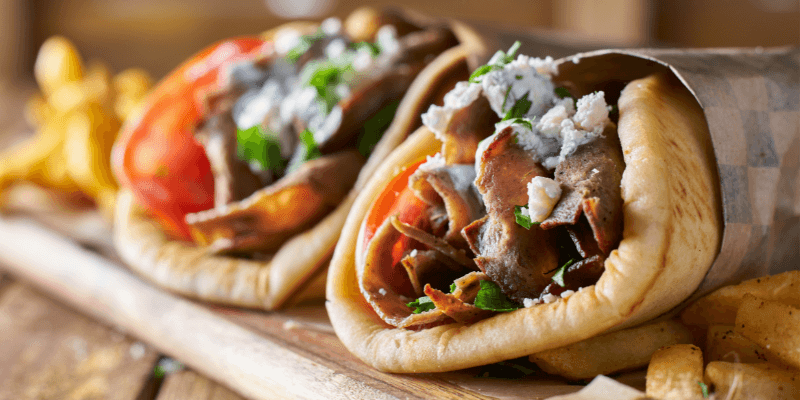
A Greek-style gyro commonly combines seasoned meat with pita bread, tomatoes, onions, and cool tzatziki sauce. Shawarma, associated with Middle Eastern cooking traditions, often features marinated meat with aromatic spices, pickles, and sauces such as garlic sauce or tahini.
Both have many regional variations, so no single recipe represents every gyro or every shawarma.
The cooking methods can be similar, but the flavors and accompaniments often make them easy to distinguish once you know what to look for.
In this guide, we’ll compare seven important differences, explain how each dish developed, and explore why gyros have become such a familiar part of the American restaurant scene.
Gyro vs. Shawarma: 7 Differences at a Glance
The easiest way to understand these foods is to compare their typical ingredients, preparation, and serving styles.
| Feature | Gyro | Shawarma |
|---|---|---|
| Culinary Origin | Greek | Middle Eastern, particularly Levantine traditions |
| Common Meats | Pork or chicken in Greece; often lamb and beef in the U.S. | Chicken, beef, lamb, and other regional variations |
| Typical Seasonings | Oregano, garlic, thyme, rosemary, and related herbs | Cumin, coriander, cardamom, cinnamon, allspice, and garlic |
| Cooking Style | Traditionally vertical rotisserie | Traditionally vertical rotisserie |
| Typical Bread | Greek-style pita | Pita or other regional flatbreads |
| Common Sauce | Tzatziki | Garlic sauce, tahini sauce, or other regional sauces |
| Popular Toppings | Tomatoes, onions, and sometimes fries | Pickles, vegetables, and sometimes fries |
These are typical patterns rather than strict rules.
Different countries, communities, restaurants, and families prepare both dishes in their own ways. A chicken gyro is still a gyro, and a shawarma sandwich doesn’t necessarily have to contain every spice or topping listed above.
What matters most is the broader culinary tradition and how the ingredients work together.
Where Do Gyros and Shawarma Come From?
Their shared cooking ancestry helps explain the resemblance, but their culinary identities developed in different places.
The Greek Gyro Tradition
Gyros are closely associated with Greek street food.
The name comes from the Greek word connected with turning or rotation, referring to the movement of meat on a rotating spit.
As the meat cooks, the browned exterior can be shaved into thin pieces and served with bread, vegetables, and sauce.
In Greece, pork and chicken are common gyro meats. Greek-American versions often use a seasoned mixture of lamb and beef, which has become especially familiar in restaurants across the United States.
The American gyro also reflects how immigrant food traditions adapt to local ingredients and dining preferences.
Many diners in the Chicago area recognize gyros as warm pita sandwiches filled with thin slices of seasoned meat, onions, tomatoes, and cucumber-based tzatziki sauce.
The Middle Eastern Shawarma Tradition
Shawarma is strongly associated with the Middle East, particularly the Levant, including Lebanon, Syria, Palestine, and Jordan.
Like gyros, shawarma developed from a broader tradition of cooking meat on rotating spits connected to Ottoman-era cuisine.
Over time, cooks developed distinctive marinades, spice combinations, breads, sauces, and accompaniments.
Shawarma became popular as a convenient street food that could be sliced, wrapped, and eaten without a formal sit-down meal.
Depending on the region, a shawarma wrap may contain chicken, beef, or lamb, accompanied by pickled vegetables and garlic or sesame-based sauces.
Both share a historical connection to rotating-spit meat cooking, but their ingredients and serving customs developed distinct regional identities.
Gyro Meat vs. Shawarma Meat: What Is Different?
One of the clearest distinctions involves the types of meat commonly used and how that meat is prepared.
Both dishes can contain beef, lamb, or chicken. However, the preparation methods and traditional combinations are not always the same.
What Is Gyro Meat Made Of?
In many American restaurants, gyro meat is made from a seasoned mixture of beef and lamb.
The meat may be finely ground or processed, combined with seasonings, and formed into a dense loaf or cone for cooking.
After cooking, it can be sliced into thin pieces.
This produces the familiar texture many American diners associate with a classic gyro sandwich: tender, seasoned slices with browned edges.
Traditional Greek variations may use stacked slices of pork or chicken rather than the American-style lamb-and-beef mixture.
What Is Shawarma Meat Made Of?
Shawarma often uses thin slices of meat that have been marinated before cooking.
Chicken, beef, and lamb are common choices, although other regional preparations exist.
The marinade helps create the dish’s characteristic flavor. Depending on the recipe, it may contain garlic, citrus, vinegar, yogurt, oil, and a mixture of spices.
When cooked on a vertical rotisserie, the exterior develops browned edges while the interior layers continue cooking.
The cooked outer portions are sliced for serving.
Both descriptions have exceptions, so texture alone cannot always identify the dish.
At Mayo Grill in Aurora, IL, our classic gyro features seasoned lamb-and-beef meat served in warm pita with tomatoes, onions, and tzatziki.
That is the familiar Greek-American gyro style many customers recognize throughout the Chicago suburbs.
How Does Gyro Taste Compared With Shawarma?
The seasonings create one of the most noticeable differences between these two dishes.
Although both are savory meat dishes, they often emphasize different flavor profiles.
Typical Gyro Flavor
Gyro seasoning commonly emphasizes herbs and savory aromatics.
Garlic, oregano, thyme, rosemary, black pepper, and related seasonings are associated with different gyro recipes.
The result is often an herb-forward, savory flavor that pairs especially well with the cool freshness of tzatziki.
In a classic gyro sandwich, the seasoned meat provides richness while tomato, onion, and yogurt sauce contribute moisture, acidity, and freshness.
Typical Shawarma Flavor
Shawarma frequently emphasizes warm, aromatic spices.
Depending on the region and meat, recipes may incorporate cumin, coriander, cardamom, cinnamon, allspice, turmeric, black pepper, and garlic.
These spices do not necessarily make shawarma hot or intensely spicy.
Instead, they can create a layered aroma with earthy, warm, and slightly sweet notes.
Chicken shawarma may feature a citrusy garlic marinade, while beef or lamb preparations may emphasize a different balance of spices.
Often associated with garlic, oregano, and other herbs, complemented by fresh vegetables and creamy tzatziki.
Often associated with a deeper mixture of spices, garlic, marinades, pickled vegetables, and regional sauces.
Neither dish has one universally correct flavor profile. Restaurant recipes, regional traditions, and personal preferences create substantial variation.
However, the contrast between herb-forward gyro seasoning and the warm-spice combinations common in shawarma is a useful starting point.
Gyro Sauce vs. Shawarma Sauce
Even when the meats look similar, the sauce can completely change the taste of the sandwich.
Tzatziki: The Familiar Gyro Sauce
Tzatziki is one of the most recognizable accompaniments to a Greek-style gyro.
It is traditionally a yogurt-based sauce featuring cucumber and garlic, often with herbs, olive oil, or lemon.
Its cool and tangy character helps balance the richness of seasoned meat.
The sauce also contributes moisture without overwhelming the meat’s savory flavor.
If you’re curious about what makes this sauce distinctive, read our guide to what tzatziki sauce is and how it tastes.
Garlic Sauce and Tahini: Common Shawarma Accompaniments
Shawarma can be served with several different sauces depending on the region and type of meat.
One common accompaniment is toum, a garlic-forward emulsion traditionally made using garlic, oil, lemon juice, and salt.
Tahini-based sauce is another familiar option, particularly alongside certain beef and lamb preparations.
Tahini comes from ground sesame seeds and creates a rich, nutty base for sauce.
Some shawarma preparations also include yogurt-based sauces, spicy sauces, or other regional condiments.
The sauce is an important part of the dish’s identity, but individual restaurants may offer their own variations.
Is Gyro Bread the Same as Shawarma Bread?
Both dishes are commonly served in flatbread, which is one reason they can look similar.
However, the specific type of bread and the way the sandwich is assembled can differ.
Greek-Style Gyro Pita
A gyro is commonly served in soft, warm pita bread.
The pita is wrapped or folded around the meat, vegetables, and sauce to create a handheld meal.
Many Greek-style pitas are relatively thick and flexible, helping them hold substantial fillings.
In the United States, a gyro may also be served as a platter, with pita bread alongside the meat rather than wrapped around it.
Shawarma Flatbread
Shawarma may be wrapped in several types of flatbread.
Depending on the region, restaurants may use pita, thin Arabic flatbread, or other local varieties.
Some shawarma wraps are rolled tightly, helping hold the meat, pickles, sauces, and other ingredients together.
The result can be a more compact wrap than the folded pita style many Americans associate with gyros.
Still, bread choice alone is not a reliable test. Both dishes can be served in multiple ways.
Gyro Toppings vs. Shawarma Toppings
The vegetables and accompaniments can be just as distinctive as the meat.
Common Gyro Toppings
A familiar Greek-American gyro sandwich often includes tomatoes, onions, and tzatziki.
Some preparations include lettuce, while others focus on the more traditional combination of meat, tomato, onion, and sauce.
French fries can also be part of a gyro, especially in Greek street-food preparations.
The ingredients work together through contrast: savory meat, fresh vegetables, soft bread, and a cool sauce.
Common Shawarma Toppings
Shawarma toppings vary considerably by country and restaurant.
Pickled cucumbers, pickled turnips, onions, parsley, tomatoes, and other vegetables may be included.
The acidity from pickled vegetables can balance the richness of the meat and its aromatic marinade.
French fries are also found inside some shawarma wraps, particularly certain chicken shawarma preparations.
Because both foods have adapted to local preferences, there is substantial overlap.
Are Gyros and Shawarma Cooked the Same Way?
Their traditional cooking methods are closely related, but preparation practices can differ.
Both dishes are historically associated with vertical rotisserie cooking.
In this method, meat is arranged on a large upright spit that rotates beside a heating element.
The exterior cooks and develops a browned surface. As cooking progresses, appropriately cooked portions can be sliced for serving.
This technique produces thin pieces of meat with a combination of tenderness and browned edges.
Traditional Gyro Preparation
Gyro preparation varies by region.
American-style gyro meat is frequently formed from a seasoned ground-meat mixture, while some Greek preparations use stacked slices of pork or chicken.
The exact cooking equipment and finishing technique also vary among restaurants.
Traditional Shawarma Preparation
Shawarma often begins with sliced meat marinated in spices and other flavorful ingredients.
The slices may be layered onto the rotating spit and cooked gradually.
The combination of marinade, fat, heat, and browning contributes to shawarma’s distinctive flavor.
Food safety procedures are particularly important for vertical rotisserie meat because the outer layers may be cooked while interior portions are still raw.
Restaurants must follow applicable food-handling and cooking requirements, including appropriate handling of sliced meat.
Not every gyro or shawarma sold today is cooked on a rotisserie. Some restaurants use other cooking methods or prepared meat products.
The historical cooking tradition helps explain the relationship between the dishes, but it should not be used to assume how any particular restaurant prepares its food.
Gyro or Shawarma: Which One Should You Try?
There is no universal winner. The better choice depends on the flavors and textures you enjoy.
If you like savory meat, warm pita, fresh onions and tomatoes, and a cooling cucumber-yogurt sauce, a classic gyro may be an appealing choice.
If you enjoy aromatic spices, marinated meat, pickled vegetables, and garlic-forward sauces, shawarma may be more aligned with your preferences.
Savory lamb-and-beef flavor, Greek-style herbs, soft pita, tomatoes, onions, and creamy tzatziki.
Marinated meat, fragrant spices, pickled vegetables, and bold garlic or tahini-based sauces.
Of course, someone who enjoys one will often enjoy the other.
The dishes share enough characteristics that trying both can be an interesting way to understand how different cultures developed distinct interpretations of related cooking traditions.
Craving a Classic Gyro in Aurora, IL?
Mayo Grill serves several gyro-style meals, from a traditional pita sandwich to a larger gyro plate and a crispy specialty.
If you’re in Aurora, Illinois, and want to try the Greek-American gyro style described in this article, Mayo Grill’s gyro menu is a place to start.
Our classic gyro combines seasoned lamb-and-beef meat with warm pita bread, tomatoes, onions, and creamy tzatziki sauce.
It is served with fries, making it a complete meal rather than just a small sandwich.
Mayo Grill also offers other gyro preparations for customers who want a different portion size or texture.
Seasoned lamb-and-beef gyro meat with tomatoes, onions, and tzatziki in warm pita. Served with fries.
A larger portion of gyro meat with two warm pita breads, tomatoes, onions, tzatziki, and fries.
A different preparation featuring gyro meat in a deep-fried tortilla wrap with grilled onions, sweet peppers, tomato, and tzatziki. Served with fries.
These options illustrate how a restaurant can build several dishes around familiar gyro flavors while offering different textures and portions.
Mayo Grill does not currently list shawarma on its published menu, so the comparison in this article is intended to help readers understand the two foods—not suggest that both are available for ordering.
For more ideas on what complements a gyro meal, see our guide to the best sides to serve with gyros.
Looking for Gyros in Aurora?
Enjoy seasoned lamb-and-beef gyro meat, warm pita, fresh toppings, creamy tzatziki, and fries at Mayo Grill. Explore our classic and specialty gyro options.
Frequently Asked Questions About Gyro vs. Shawarma
Are gyros and shawarma the same thing?
No. Although they share a related vertical-rotisserie cooking tradition, gyros belong to Greek cuisine while shawarma is associated with Middle Eastern cooking. Their typical spices, sauces, toppings, and regional serving styles differ.
What is the main difference between gyro and shawarma meat?
American-style gyro meat commonly uses seasoned lamb and beef formed into a loaf or cone. Shawarma commonly uses slices of marinated chicken, beef, or lamb. Both have regional and restaurant-specific variations.
Does shawarma taste like a gyro?
They share some savory characteristics, but gyros are often associated with Greek herbs and tzatziki, while shawarma may feature warm aromatic spices, pickles, and garlic or tahini-based sauces.
Is gyro Greek or Middle Eastern?
Gyro is a Greek dish with historical connections to broader rotating-spit meat traditions. Shawarma is associated with Middle Eastern cuisine, particularly the Levant.
What sauce is traditionally served with gyros?
Tzatziki is a familiar gyro accompaniment. It is typically made from yogurt, cucumber, garlic, and other seasonings. Specific recipes vary.
What sauce comes with shawarma?
Shawarma may be served with garlic sauce, tahini-based sauce, yogurt-based sauces, or other regional accompaniments. Sauce choice often depends on the type of meat and local tradition.
Is shawarma always spicy?
No. Shawarma may contain numerous aromatic spices without being particularly hot. Its heat level depends on the recipe and any hot sauces added.
Can gyros be made with chicken?
Yes. Chicken gyros are common in Greece, alongside pork variations. In the United States, many restaurants specialize in lamb-and-beef gyro meat.
Does Mayo Grill serve gyros in Aurora, Illinois?
Yes. Mayo Grill serves a classic lamb-and-beef gyro sandwich, a gyro plate, and a crispy gyro sandwich. The restaurant is located at 954 East New York Street, Unit B, Aurora, IL 60505.
Gyro and Shawarma Share a Tradition, but Each Has Its Own Identity
Understanding their differences makes both dishes more interesting to explore.
Gyros and shawarma demonstrate how similar cooking techniques can develop into distinctive foods across different cultures.
Both have strong connections to seasoned meat, warm bread, and flavorful accompaniments.
But a gyro’s Greek heritage, familiar herb combinations, and cool tzatziki create a different experience from the aromatic spices and sauces commonly associated with shawarma.
Neither is inherently better. They’re simply different expressions of a related culinary tradition.
If you’re in the Aurora area and craving the familiar Greek-American gyro style, explore Mayo Grill’s gyro options or browse the full Mayo Grill menu for more made-to-order favorites.
Address: 954 East New York Street, Unit B, Aurora, IL 60505
Phone: (331) 258-6603
Hours: Monday–Saturday 10 AM–10 PM; Sunday 11 AM–8 PM
Website: mayogrill.com