Updated October 2026
10–12 Minute Read
Italian Beef vs. French Dip: What’s the Difference?
At first glance, an Italian beef and a French dip can look like nearly the same sandwich. Both feature roast beef, bread, and savory beef juices. Both can be messy. Both are especially appealing when you want a hot, hearty sandwich rather than a cold deli-style meal.
But they are not the same sandwich.
The differences become obvious once you look at the details: where the sandwiches developed, how the beef is prepared and sliced, what kind of bread is used, how the jus is handled, which toppings are traditional, and what the finished sandwich tastes and feels like.
Understanding that difference is useful whether you are visiting the Chicago area, looking for a Chicago-style sandwich in Aurora, comparing menu items, or simply trying to figure out which sandwich sounds better for your next meal.
Italian Beef vs. French Dip: The Short Version
If you only remember one thing, remember this: the sandwiches are related, but they developed into different regional traditions.
| Feature | Italian Beef | French Dip |
|---|---|---|
| Regional identity | Chicago, Illinois | Los Angeles, California |
| Meat | Thinly sliced seasoned roast beef | Roast beef, commonly sliced for the sandwich |
| Jus | Used directly with the sandwich | Typically served alongside for dipping |
| Peppers | Giardiniera and/or sweet peppers are common | Not a defining traditional topping |
| Bread | Sturdy Italian-style or French-style roll | French roll or similar crusty bread |
| Overall flavor | Savory, seasoned, juicy, tangy and potentially spicy | Beef-forward, savory and au-jus driven |
| Best for | A Chicago-style sandwich with bold toppings | A simpler roast-beef sandwich with dipping jus |
What Is an Italian Beef Sandwich?
Italian beef is one of Chicago’s best-known sandwiches and is built around thinly sliced seasoned roast beef, bread, beef jus, and peppers.
The name can be confusing because Italian beef is not simply an Italian dish brought directly from Italy. It is a Chicago Italian-American food tradition that developed in the city and became closely associated with Chicago’s restaurant and food culture.
The sandwich starts with roast beef that is sliced very thinly. The thin slices are important because they allow the beef to absorb the savory cooking juices and make the sandwich easier to bite through.
The bread also matters. A good Italian beef needs bread that can hold the beef and moisture without immediately falling apart.
Then come the toppings.
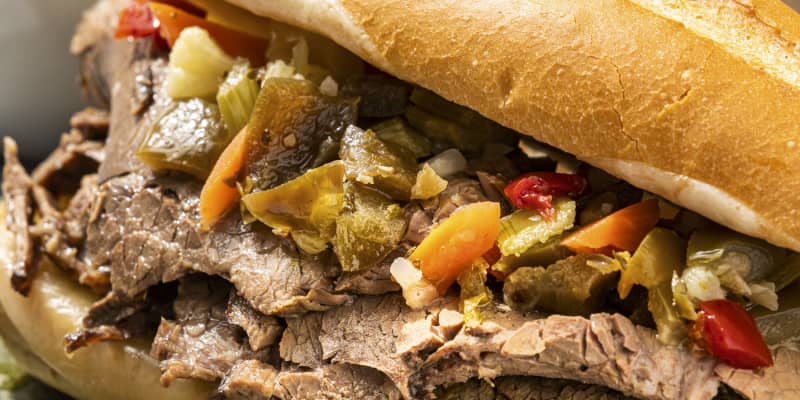
Tender roast beef sliced thin enough to combine with the jus and bread in every bite.
The roll has to hold the beef while also handling the moisture from the jus.
Savory cooking juices add moisture and much of the sandwich’s signature flavor.
Sweet peppers or spicy giardiniera can dramatically change the flavor and texture.
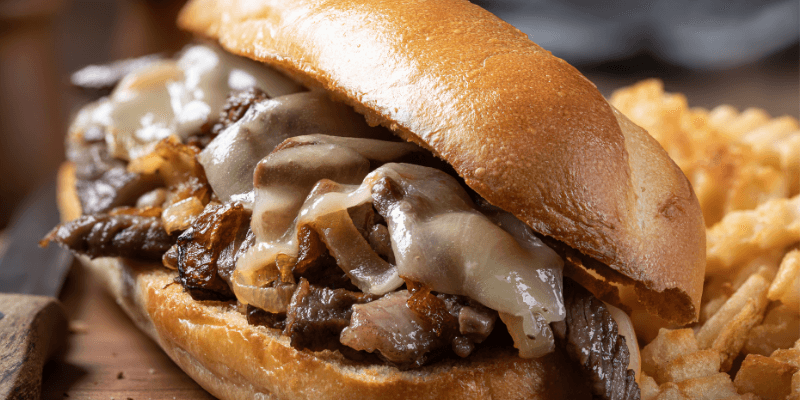
Mayo Grill’s Italian Beef features thinly sliced roast beef on a crusty roll with giardiniera and mozzarella. It is served with fries and can be ordered dry, dipped, or with additional au jus.
If you want a deeper explanation of the sandwich itself, Mayo Grill also has a dedicated guide explaining what Italian beef is, how the beef, bread, jus, and peppers work together, and the difference between dry and dipped preparations.
What Is a French Dip Sandwich?
The French dip is another roast-beef sandwich associated with beef, bread, and savory jus, but its traditional presentation is different from Italian beef.
Despite the name, the French dip is generally considered an American sandwich rather than a sandwich that originated in France. Its history is associated with Los Angeles, where two historic restaurants have long been connected with competing origin stories for the sandwich.
The basic idea is straightforward: roast beef is placed inside a French roll or similar bread, and a savory beef jus is served with the sandwich so the diner can dip the sandwich into the liquid.
That last part is one of the biggest distinctions between the two sandwiches.
The diner controls how much of the sandwich gets dipped and how much moisture is added to each bite.
French dip sandwiches can vary considerably between restaurants. Cheese, mustard, onions, horseradish, and other additions may appear depending on the restaurant’s recipe.
That means there is not necessarily one universal French dip recipe. But the combination of roast beef, bread, and dipping jus remains the central concept.
Where Did Italian Beef and French Dip Come From?
One of the most interesting things about these sandwiches is that neither name tells the whole story.
Italian beef is strongly associated with Chicago and developed within the city’s Italian-American communities. French dip is associated with Los Angeles and is connected to the early twentieth-century restaurant culture of the city.
Italian Beef
Developed as part of Chicago’s Italian-American food culture and eventually became one of the city’s signature sandwiches.
French Dip
Associated with Los Angeles and the early restaurant traditions surrounding the sandwich.
The exact origin stories are debated, particularly for the French dip and the early development of Italian beef. It is better to think of both sandwiches as regional food traditions that developed over time rather than dishes with one universally documented inventor.
What is much easier to establish is the identity each sandwich developed afterward. Italian beef became deeply connected to Chicago. French dip became strongly associated with Los Angeles.
How Is the Beef Different?
Both sandwiches use roast beef, but the way the beef is sliced, seasoned, cooked, and combined with the jus affects the final result.
Italian beef is particularly known for very thin slices. The beef is cooked and then sliced thin enough that the meat can mingle with the jus rather than remaining a thick slice sitting independently inside the bread.
That thin slicing is one reason Italian beef has such a distinctive texture. Instead of taking a bite through one thick piece of roast beef, you get many thin pieces layered together.
French dip can also use thinly sliced roast beef, but the preparation is generally less defined by the Chicago-style combination of thin beef, gravy, and pepper toppings.
Italian Beef Is Designed Around the Jus
The beef, bread, and jus are intended to work together as one wet, savory sandwich. That is different from the French dip format, where the jus traditionally sits beside the sandwich and the diner decides how much to use.
Italian Beef Jus vs. French Dip Au Jus
This is where the comparison gets especially interesting.
Both sandwiches involve a savory beef liquid, but they use it differently.
The Jus Is Part of the Sandwich
The beef and bread are combined with the savory cooking liquid. The sandwich can be prepared relatively dry, wet, or dipped depending on the restaurant and customer’s preference.
The Jus Is Usually Served Beside It
The sandwich comes with au jus so the diner can dip portions of the sandwich into the liquid while eating.
In other words, the difference is not simply whether the sandwich gets wet.
It is how the moisture becomes part of the eating experience.
An Italian beef can arrive with the bread already carrying the jus. A French dip usually lets the diner control the dipping.
That creates two different textures. The Italian beef can become extremely juicy and soft, especially when dipped. A French dip can maintain more of its original bread texture until you decide to dunk it.
Italian Beef Bread vs. French Dip Bread
The bread is not just a container. It determines how the sandwich handles the jus and changes the texture of every bite.
Because Italian beef is intentionally juicy, the bread needs enough structure to hold the meat and liquid.
At the same time, the bread cannot be so hard or thick that it overwhelms the thinly sliced beef.
French dip bread also has to withstand dipping, but the sandwich is generally served with the jus separately. This means the bread can begin with more of its original structure before the diner starts dipping it.
Italian Beef: The bread is expected to become part of the juicy experience.
French Dip: The bread can stay firmer until you choose to dip it.
This is also why eating a dipped Italian beef can be a completely different experience from eating a regular roast-beef sandwich.
Giardiniera Is a Major Italian Beef Difference
If you have never had Chicago-style giardiniera, this may be the ingredient that makes the difference between the two sandwiches most obvious.
Giardiniera is a mixture of vegetables and peppers preserved with acidity and oil. Chicago-style versions can bring heat, crunch, tang, and a rich savory quality to a sandwich.
Italian beef commonly gets paired with either hot giardiniera or sweet peppers.
Giardiniera
Adds heat, acidity, crunch, vegetables, and a bold flavor that cuts through the richness of the beef and jus.
Sweet Peppers
Add a softer texture and mild sweetness without the same level of chile heat.
Traditional French dip sandwiches do not rely on giardiniera as a defining ingredient. That makes the Italian beef more complex in terms of toppings.
This is one reason someone who enjoys spicy, tangy, or pickled flavors may prefer Italian beef, while someone who wants a simpler roast-beef profile may prefer French dip.
Does Italian Beef Have Cheese? Does French Dip?
Cheese can appear on either sandwich, but it is not the feature that defines either one.
A traditional Italian beef does not require cheese to be an Italian beef. The core combination is beef, bread, jus, and the traditional pepper choices.
However, many modern restaurant versions add cheese, and customers may prefer the richer combination of melted cheese, beef, peppers, and jus.
Mayo Grill serves its Italian beef with thinly sliced roast beef, giardiniera, mozzarella, and au jus on a crusty roll.
French dips may also be served with cheese depending on the restaurant. Swiss, provolone, and other cheeses can appear on variations of the sandwich.
Cheese is a variation. The beef, bread, jus, and overall preparation are what make the two sandwiches distinct.
How Do Italian Beef and French Dip Taste Different?
The easiest way to understand the difference is to think about what dominates each sandwich.
Bold + Juicy + Tangy + Savory
Seasoned beef, savory jus, giardiniera or sweet peppers, melted cheese when included, and bread create several layers of flavor.
Beefy + Savory + Simple
Roast beef and au jus take center stage, with optional cheese, mustard, horseradish, onions, or other additions depending on the restaurant.
Neither flavor profile is automatically better. They simply answer different cravings.
Italian Beef or French Dip: Which Is Better for You?
There is no universal winner. The better sandwich depends on what you want from the meal.
You want a Chicago-style sandwich, thin-sliced beef, juicy bread, giardiniera, sweet peppers, mozzarella, or a more intensely seasoned combination of flavors.
You want roast beef with a simpler profile and prefer controlling the amount of jus by dipping the sandwich yourself.
If you are visiting the Chicago area or want to try a food that is strongly connected to Chicago, Italian beef is the obvious regional choice.
Dry, Wet, Dipped: Why Italian Beef Has Its Own Language
One of the most recognizable parts of Chicago Italian beef culture is the way customers talk about how much jus they want.
The exact terminology can vary somewhat from one restaurant to another, but the basic idea is simple: you can control how much moisture ends up in the sandwich.
More Bread Texture
The sandwich has less additional jus, allowing the roll to remain firmer.
More Jus
Additional jus makes the sandwich softer and adds more savory flavor.
Maximum Juicy Experience
The assembled sandwich is dipped or heavily coated with jus, creating a very soft and juicy sandwich.
This ordering language is part of what makes Italian beef such an interesting Chicago food. The customer is not merely ordering a sandwich. They are choosing how the sandwich should be eaten.
Looking for Italian Beef in Aurora?
If the Chicago-style side of this comparison sounds more appealing, Mayo Grill serves Italian beef at its Aurora restaurant.
Mayo Grill’s Italian beef features thinly sliced roast beef on a crusty roll with giardiniera and mozzarella. It is served with fries, and you can order it dry, dipped, or with additional au jus.
That means you can experience several of the characteristics that make Italian beef different from a French dip in one sandwich: thin-sliced beef, Chicago-style giardiniera, melted mozzarella, a sturdy roll, savory au jus, and fries.
Why Italian Beef Has Such a Strong Chicago Identity
Chicago has no shortage of famous foods, but Italian beef has a particularly strong connection to the city’s neighborhood food culture.
Unlike foods that are associated with Chicago simply because restaurants in the city serve them, Italian beef developed within Chicago and became part of the city’s everyday food landscape.
It is also a food that feels distinctly local because the ordering style, giardiniera, bread, beef, and jus all work together. Someone who orders an Italian beef “dipped with hot” is using language that carries a lot of Chicago food culture in a very short sentence.
The individual ingredients are familiar. The combination is what creates the Chicago identity.
That is also why comparing Italian beef with French dip is useful. Both sandwiches show how different American cities can take a similar basic idea and turn it into a distinct local food tradition.
Is Italian Beef Just a French Dip With Peppers?
No. That comparison explains why people confuse the two, but it leaves out several important differences.
Both sandwiches use roast beef and beef juices, which creates the obvious similarity.
But Italian beef has its own preparation and regional identity. The beef is typically very thinly sliced, the jus is incorporated into the sandwich, and giardiniera or sweet peppers are common parts of the experience.
A French dip is generally built around roast beef with au jus served separately for dipping.
Even the way the sandwich is eaten is different. A French dip gives you control over each dip. Italian beef lets the restaurant determine much of the moisture level before the sandwich reaches you, although you can request a preferred level of wetness.
They are sandwich cousins, not identical sandwiches.
Italian Beef vs. French Dip: Which Should You Order?
Instead of asking which sandwich is objectively better, match the sandwich to the kind of meal you want.
The strongest choice if you specifically want a Chicago-associated sandwich.
Giardiniera adds heat, acidity, vegetables, and crunch.
The beef and au jus remain the central flavors.
The jus is served separately so you can decide how much to use.
Ask for your Italian beef prepared with more jus or dipped.
What If Italian Beef Isn’t the Only Thing You Want?
One advantage of eating at a restaurant with a broad menu is that not everyone has to order the same food.
If one person wants Italian beef while another wants a Philly cheesesteak, gyro, burger, wings, seafood, chicken, or salad, everyone can still build a meal around a different craving.
Mayo Grill’s current Aurora menu includes Italian beef, Philly cheesesteaks, gyros, burgers, chicken, wings, fish and seafood, salads, loaded fries, hot dogs, sides, desserts, and drinks.
• Italian beef for the Chicago-style craving
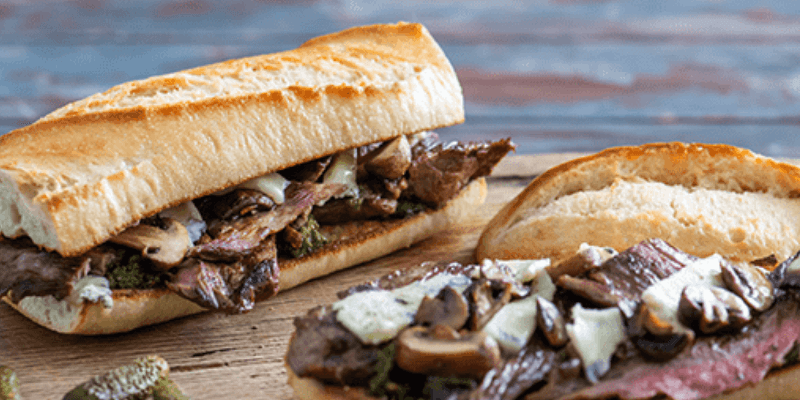
• Philly cheesesteak for the steak-and-cheese craving
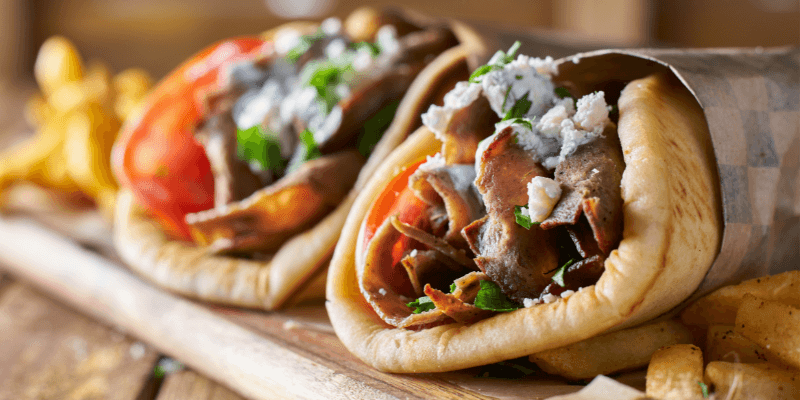
• Gyro for the pita-and-tzatziki craving
• Burger for the classic comfort-food craving
• Wings for something crispy and shareable
• Seafood or salad for someone looking for another direction
That makes the Italian beef vs. French dip question just one part of a larger Aurora food decision. You do not always have to choose one cuisine for the entire table.
Italian Beef vs. French Dip FAQs
Is Italian beef the same as French dip?
No. Both use roast beef and beef juices, but Italian beef is a Chicago-style sandwich traditionally built around thin-sliced seasoned beef, a sturdy roll, jus, and toppings such as giardiniera or sweet peppers. French dip is generally roast beef served with au jus alongside the sandwich for dipping.
Which came first, Italian beef or French dip?
Both sandwiches have early twentieth-century American histories, but they developed in different regional food cultures. French dip is associated with Los Angeles, while Italian beef developed in Chicago’s Italian-American communities.
Why is Italian beef so juicy?
Italian beef is designed around savory beef jus. The thinly sliced beef and bread can absorb the cooking juices, and the sandwich can be prepared with different levels of moisture depending on the restaurant and customer’s preference.
What is the difference between Italian beef wet and dipped?
Terminology varies by restaurant, but generally a wet Italian beef has additional jus added to the sandwich, while a dipped Italian beef is immersed or heavily coated with jus. The result is a softer and more intensely juicy sandwich.
Does Italian beef traditionally have giardiniera?
Giardiniera is one of the most recognizable traditional toppings associated with Chicago Italian beef. Sweet peppers are another common choice.
Does French dip have peppers?
Peppers are not a defining traditional feature of a French dip in the way giardiniera and sweet peppers are associated with Italian beef. Individual restaurants can add their own toppings.
Does Italian beef have cheese?
Cheese is optional rather than essential to the classic concept. Some restaurants serve Italian beef with mozzarella or provolone. Mayo Grill’s current Italian beef includes mozzarella.
Is Italian beef from Italy?
Italian beef is a Chicago Italian-American food tradition rather than a traditional sandwich directly imported from Italy.
Where can I get Italian beef in Aurora, Illinois?
Mayo Grill serves Italian beef at its Aurora restaurant with thinly sliced roast beef, giardiniera, mozzarella, au jus, and fries.
What should I order if I want a Chicago-style sandwich?
Italian beef is one of the strongest choices if you specifically want a sandwich associated with Chicago. A Chicago-style Italian beef combines thin-sliced roast beef, a sturdy roll, savory jus, and traditional toppings such as giardiniera or sweet peppers.
Italian Beef and French Dip Are Similar — But Not the Same
The confusion makes sense. Both sandwiches put roast beef and savory beef juices together with bread. But once you look closer, the differences are significant.
Italian beef is a Chicago tradition built around thinly sliced seasoned beef, a sturdy roll, jus, and toppings such as giardiniera or sweet peppers. French dip is generally a roast-beef sandwich served with au jus alongside it for dipping.
If you want bold toppings, Chicago identity, spicy giardiniera, and a sandwich designed around its jus, Italian beef is probably the better match.
If you want a simpler roast-beef sandwich and like controlling every dip yourself, French dip may be the better choice.
Craving Something in Aurora?
Mayo Grill offers more than Italian beef. Explore different food categories and find the meal that matches your craving.
Want to Try Chicago-Style Italian Beef?
Mayo Grill serves Italian beef with thinly sliced roast beef, giardiniera, mozzarella, au jus, and fries at its Aurora restaurant.
954 East New York Street Unit B
Aurora, IL 60505
(331) 258-6603